
English
From 7 Days to 24 Minutes: A Record of My Blog’s Google Indexing Speed Evolution

On June 9, manually submitted a new article, waited 7 days only then was it included.
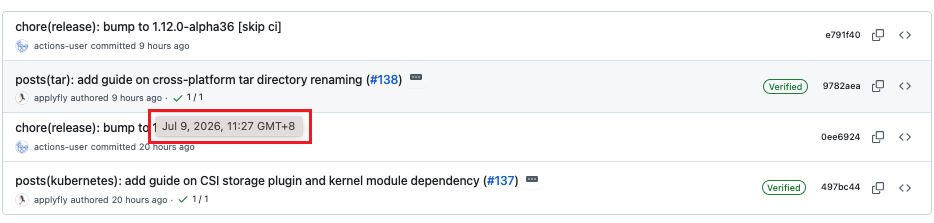
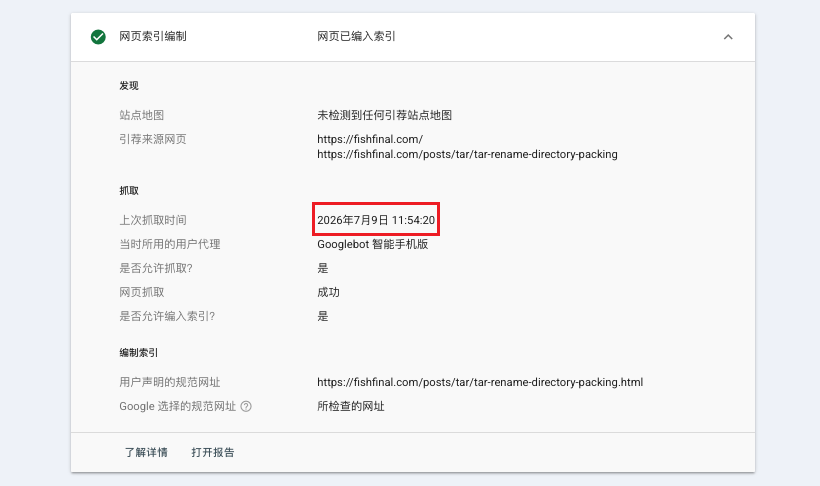
On July 9, I manually submitted a new article, which only took 24 minutes and thus completed the inclusion.
This isn’t because my luck has improved, but because in Google’s eyes, my blog has changed from a “new site” into a “trusted site.”
A month ago, I still had to repeatedly check in Search Console, "Why hasn't it been indexed yet?"; a month later, I can confidently finish writing an article, submit the link, and then go do other things.
This article records the real changes over the past month, along with a few key turning points I observed.
I. Data Comparison: From 7 Days to 24 Minutes
| Comparison item | June 9 | July 9 |
|---|---|---|
| Article | About Git and AI Commits | About tar cross-platform packaging |
| Submission method | Manually submit a single URL | Manually submit a single URL |
| Indexing time | About 7 days | Approximately 24 minutes |
| Site status | New site | Continuously updated for about 1 month |
The two articles were submitted in exactly the same way; the only difference is that there was a month of continuous updating in between.
II. Supplementary Notes on the Submission Method
During this month, I tried two submission methods:
| Submission method | Indexing time | Explanation |
|---|---|---|
| Manually submit a single URL | Initially 7 days → now 24 minutes | Significantly faster, suitable for proactive push notifications after new articles are published. |
Submit sitemap.xml | About 6 hours | Not precisely counted, but it was submitted before bed, and when I checked the next morning, it had already been included. |
Both methods have their own applicable scenarios:
Manually submit a single URL: Suitable for pushing immediately after a new article goes live, especially when the content is time-sensitive.
Submit
sitemap.xml: Suitable for batch updates or daily maintenance, with a higher degree of automation.
At the current stage, I am still using both methods in combination. As the site's trust level increases, I will gradually transition later to primarily...sitemap.xml a rhythm in which [X] is primary and manual submission is supplementary.
3. What did I do this month?
To be honest, I haven't done anything particularly special. If I had to say there is a strategy, it would be three things:
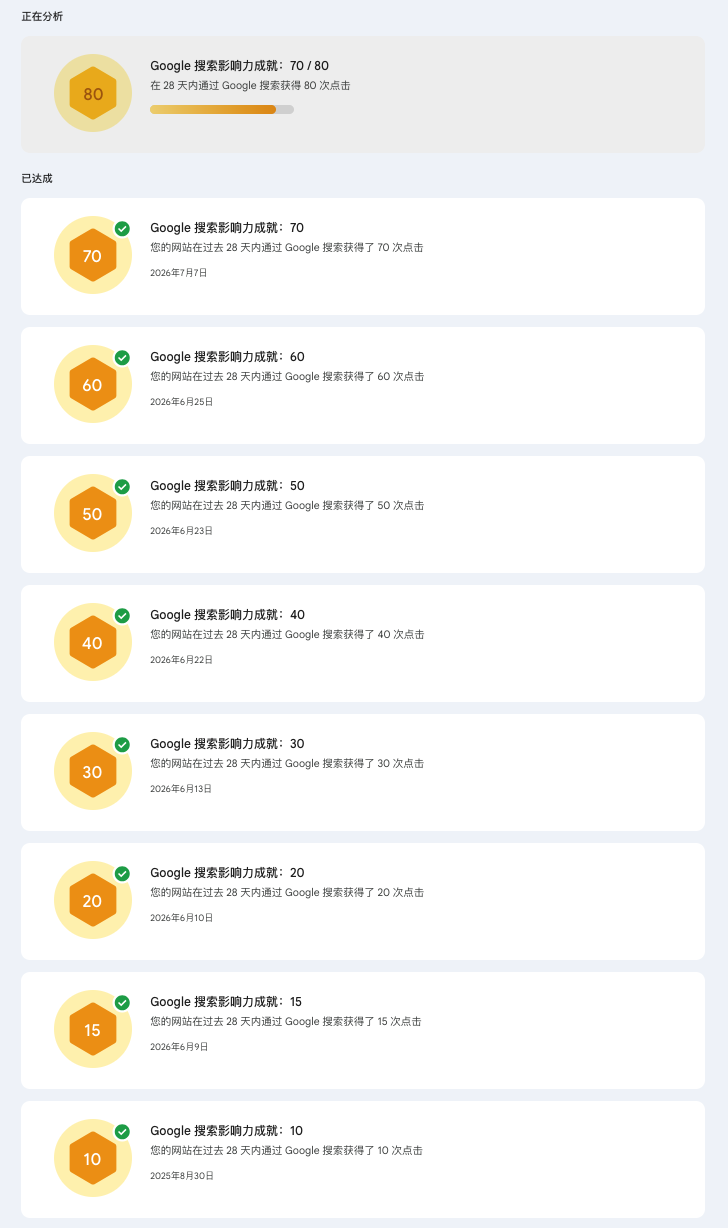
- Keep updated From June 2 to July 8, I wrote about 30-plus technical articles. The content covers Go, Kubernetes, Linux, CI/CD, security, and other areas, and most of them come from problems and solutions I encountered in my actual work.
Submit sitemap After every update, I resubmit it once in Search Console.
sitemap.xml, let Google know that the site has new content.Focus on page structure and content quality. I have never engaged in any "black hat SEO," nor have I deliberately stuffed keywords. What I do is simple: state the problem clearly, write the steps completely, and make the code accurate. In every article, I try to ensure readers can use it directly.
IV. I observed several changes
Before the indexing speed increased, I noticed a clear signal:Google has started actively crawling my new articles..
| Stage | performance |
|---|---|
| Early stage (early June) | Several days after submission, there has still been no response, so it needs to be checked repeatedly. |
| Mid-term (mid-June) | After submission, you can see the crawl records within 1-2 days. |
| Now (early July) | Indexing is completed within 24 minutes after manual submission; sitemap submission takes about 6 hours. |
This change did not happen suddenly on a single day; rather, it emerged gradually as the number of articles increased and the update frequency stabilized.
V. Some of My Reflections
Before writing this article, I kept wondering: what exactly was it that made indexing faster?
Later I realized that no single thing is decisive. What really matters is continuous This matter itself.
Continuously updated
Continuous submission
Continuous improvement
No shortcuts, no tricks—just keep doing it.
If you are also running a tech blog, my advice is simple:
Maintain update frequency——Even one a week is fine; the key is consistency.
Write every article well.——Solving one real problem is more valuable than writing ten generic pieces of content.
Submit sitemap——This is the simplest way to let Google know about your content
Wait patiently——Trust takes time to accumulate; it will gradually build up as you continue writing.
A month ago, I had to wait 7 days before I could see an article appear in search results. A month later, today, this time has been shortened to 24 minutes.
I'm curious what this time will become in another month.